Space Daily August 23, 2026 • 04:30

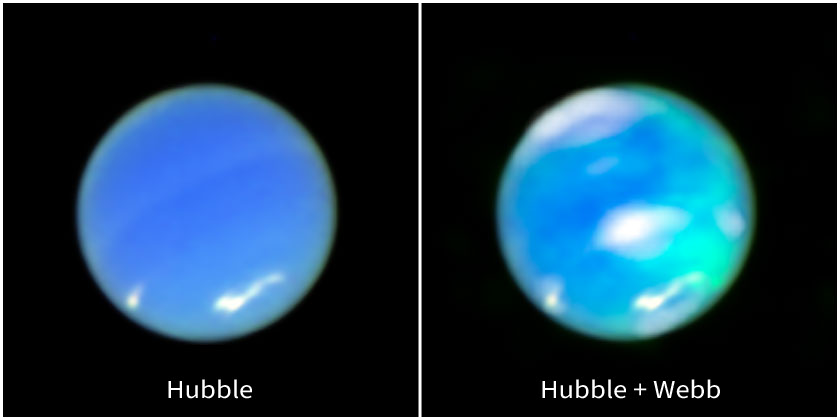
When scientists announced Webb’s first definitive detection of Neptune’s auroras in March 2025, they revealed another surprise: observations taken in 2023 showed that the planet’s upper atmosphere had cooled by several hundred degrees since Voyager 2 - Space Daily

When scientists announced Webb’s first definitive detection of Neptune’s auroras in March 2025, they revealed another surprise: observations taken in 2023 showed that the planet’s upper atmosphere had cooled by several hundred degrees since Voyager 2 - Space Daily

Webb's 2023 H3+ spectrum measured Neptune's upper atmosphere at 358 plus or minus 8 kelvin, far below Voyager 2's 1989 estimate, but two snapshots cannot yet explain what drove the change.

The first definitive detection of auroras on Neptune came with a quieter discovery concealed in the same infrared spectrum. When the James Webb Space Telescope observed the distant planet in June 202… [+10565 chars]

More from Space Daily